
Language Issues journal
Language Issues is NATECLA's part peer-reviewed journal for language teaching professionals.
What is Language Issues?
The journal, edited by Kathryn Sidaway, explores the area between academic research and classroom practice, discussing teaching, training, management and research into ESOL and community languages. Language Issues looks at broad issues and big ideas and is an invaluable resource for teachers, students, researchers and policymakers.
All articles can also be accessed via IngentaConnect.
Find out more about:
Are you a member?
You will receive an email with the link to the latest edition (PDF).
Alternatively, you can find it in the Media Library on the NATECLA Members’ Platform.
Subscribe to Language Issues
-

Existing personal member?
A Language Issues subscription is one of your benefits. New editions are published electronically twice a year. They will be shared via the media library of our Members’ Platform and email.
-

Part of one of our member institutions?
If you’ve been added as a staff member of your institution to our member platform, you will be notified when new editions are published. Contact your manager for more information, or…
-

Non-member subscriber
Universities and other research institutions can subscribe to Language Issues’ two electronic editions from only £90 per year. We will send you a PDF to upload to your library catalogue and you can access the journal via IngentaConnect.
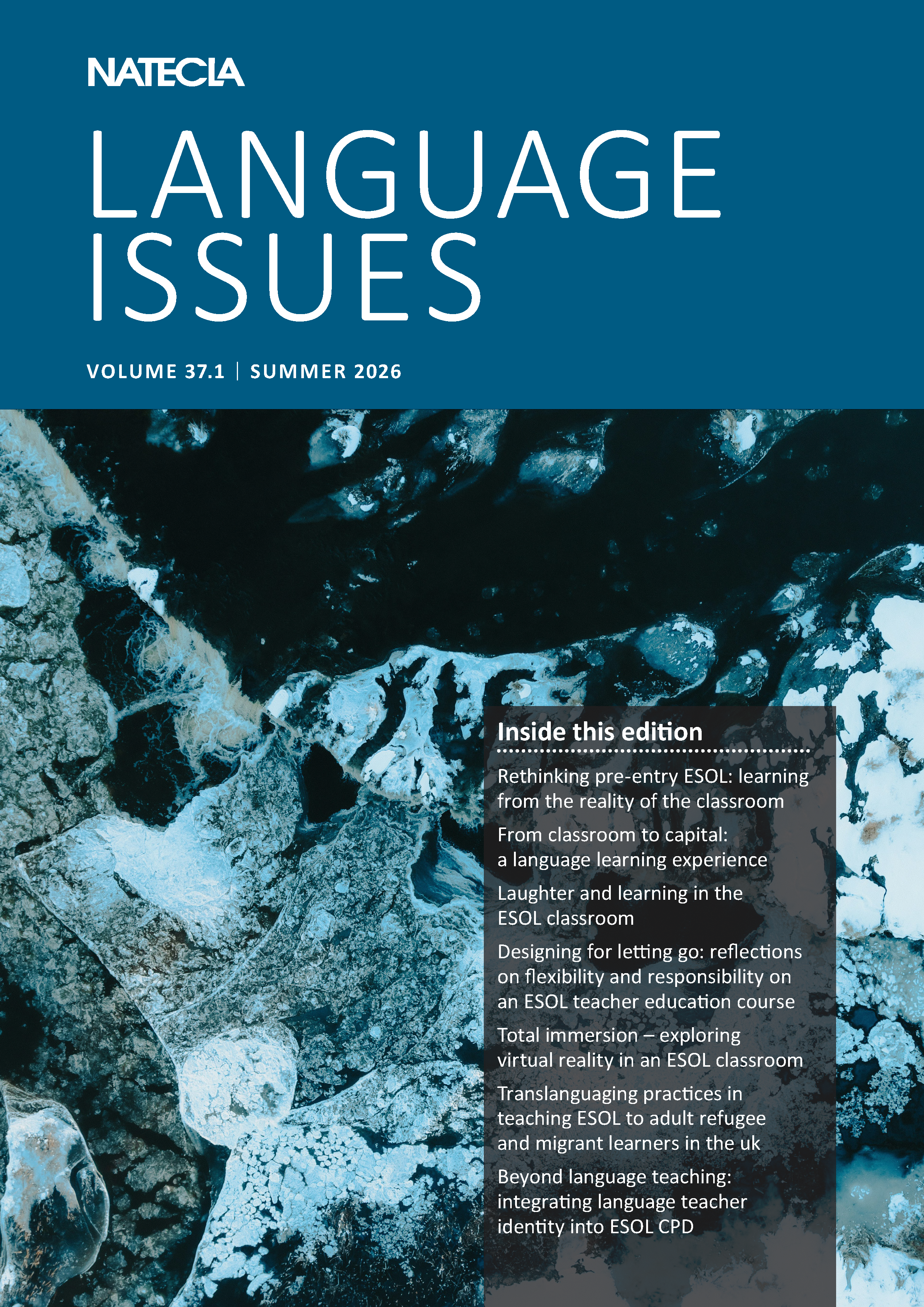
The latest issue: Summer 2026 - 37.1
This latest edition - 37.1 - features the cover article: 'Total immersion: exploring virtual reality in an ESOL classroom' (p.26), Marcin Lewandowski and Sara Elahi
Other articles in this issue include:
Rethinking pre-entry ESOL: learning from the reality of the classroom, Sabiya Naz (p.3)
From classroom to capital: a language learning experience, Emma Fitzpatrick (p.9)
Laughter and learning in the ESOL classroom, Olga Kovalenko (p.15)
Designing for letting go: reflections on flexibility and responsibility on an ESOL teacher education course, Cathy Clarkson (p.19)
Translanguaging practices in teaching ESOL to adult refugee and migrant learners in the UK, Chathuska Undugoda (p.36)
Beyond language teaching: integrating language teacher identity into ESOL CPD, Paula Alcaraz Barrowcliffe (p.49)
Book Review: Xerri, D., Golubovikj, A., Graham, C. (eds) (2026) Sustainability in English Language Teaching. Skopje: Balkan University Press, Ann Cowie (p.59)
Accessing the Language Issues back-catalogue
Whether you are receiving an automatic Language Issues subscription as part of your NATECLA membership, or subscribing to the publication directly, you can conveniently access the Language Issues back catalogue in one of two ways:

-
For Personal NATECLA members and staff members of our Institutional members
From 2020 onwards, all NATECLA personal members and those who are employed by one of our Institutional Members, can access all past editions of Language Issues in PDF format via the Media Library of the NATECLA Members’ Forum.
Simply log in and use the search function at the top of the page.
-
For all NATECLA members and our direct Language Issues Subscribers
NATECLA uploads all editions of Language Issues to the IngentaConnect platform meaning that members and Language Issues subscribers can search for and download articles from all editions of the publication since 2013.
Useful guides to help you activate your free NATECLA subscription for the IngentaConnect platform:
Previous Articles
Take a look at the articles published in our most recent editions. Then access the article of your choice using the options above.
-
This edition - 36.2 - features the cover article: ‘The burden of fluency: ESOL in an era of conditional belonging’ (p.58), by Declan Flanagan.
Other articles in this issue include:
Supporting adult language learning beyond the classroom: a reflective evaluation of the ESOL Digital Pathways Project by Andrew Porterfield (p.3)
Linguistic socialisation through creative practice: a migrant woman’s journey of integration by Josianne Block (p.14)
Parental perceptions on children’s use of digital devices and language learning: a post-pandemic study among parents of school children in Ireland by Md Touhidul Islam (p.23)
Migrant women-only ESOL learning spaces in Northern Ireland by Juana Simpson (p.33)
Research Summary: Doing ESOL in times of far-right resurgence: An exploratory ethnography of activism and English Language Teaching in Glasgow by Katy Highet (p.41)
One sound at a time: supporting a dyslexic adult esol learner through phonemic awareness by Sara Khan (p.44)
The Palestinian table in the ESOL classroom: recipes for a reparative praxis by Chiara Colombo (p.52)
-
Editorial - Declan Flanagan
It includes the following articles:
‘A response to the UK Government’s White Paper, Language Issues Editorial Team
NCC AI project in the lab: What is the impact of AI on teaching and learning?, Viorica Lucuta
Blended learning in further education: A case study of Adult ESOL Programmes in Northern Ireland, Andrew Porterfield
Think digital! Get in the game: The experiences of integrating digital skills within the lower-level (entry 1) ESOL curriculum at Denton College, Sara Khan
36 Experiences of queer second language (L2) teachers in Canada: (Un)preparedness, (Dis)comfort, and (Re)actions, Robert Grant
48 Practical recommendations for addressing SLIFE and trauma in adult TESOL in the United States, David Houselm description
-
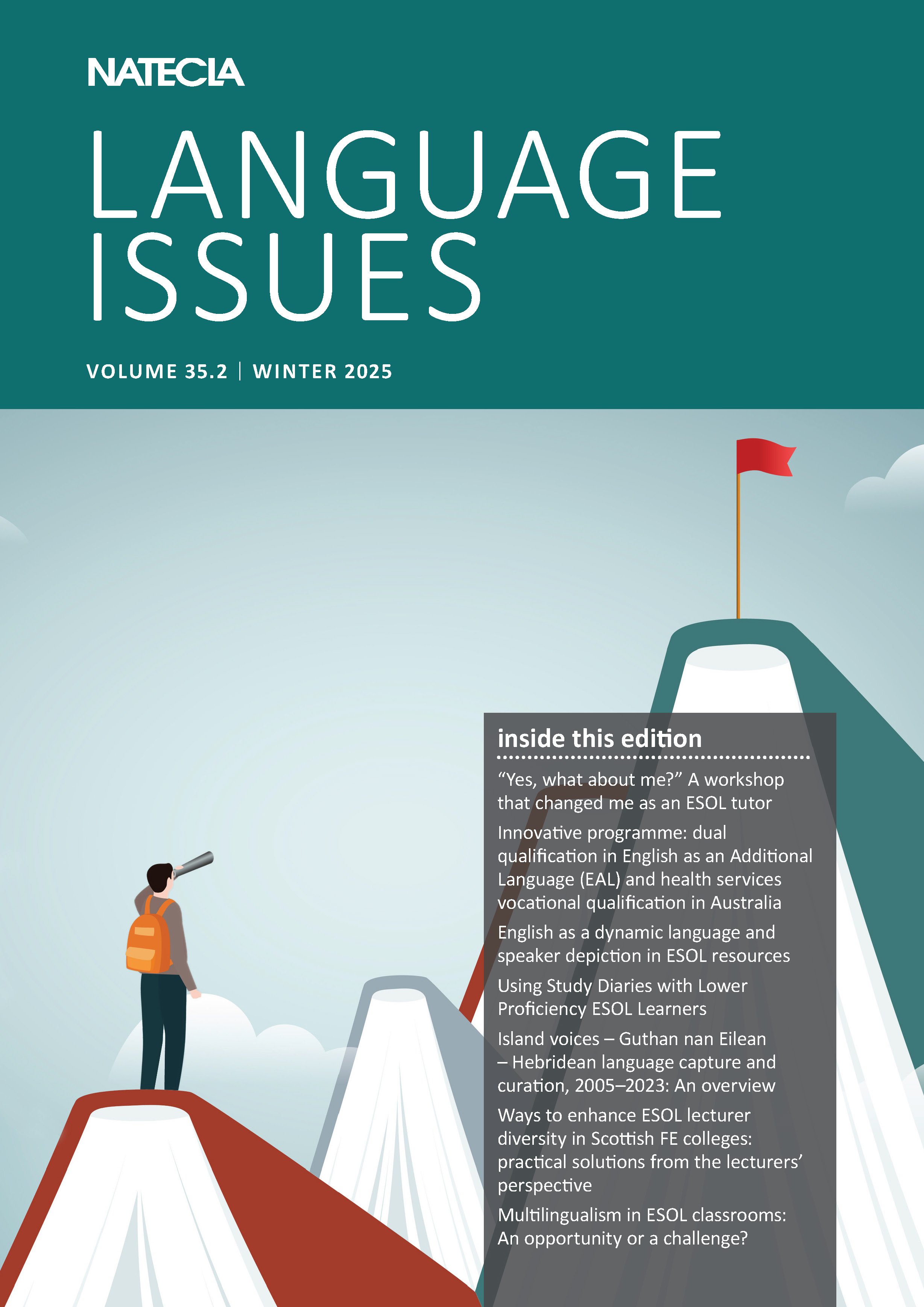
‘Yes, what about me?’. A workshop that changed me as an ESOL tutor - May Milton
Innovative programme: dual qualification in English as an Additional Language (EAL) and health services vocational qualification in Australia - Jyoti Sharma
English as a dynamic language and speaker depiction in ESOL resources - Tiantian Han
Using Study Diaries with Lower Proficiency ESOL Learners -Mathew Ashcroft
Island voices – Guthan nan Eilean – Hebridean language capture and curation, 2005–2023: an overview - Gordon Wells
Ways to enhance ESOL lecturer diversity in Scottish FE colleges: practical solutions from the lecturers’ perspective - Paula Barrowcliffe
Multilingualism in ESOL classrooms: An opportunity or a challenge? - Josianne Block
BOOK REVIEW: The teacher gap, Allen, R and S. Sims - Linda Ulrich.
-
Editorial - Declan Flanagan
NATECLA’s response to the Coalition for Language Education
PEER REVIEWED ARTICLES
Language learning motivation and the ESOL exam system in England - Kathryn Sidaway
Crafting anti-colonial pedagogy in English language learning - Sara Carpenter, Bahar Biazar, Shirin Haghgou
‘Who am I to teach you?’: Critical reflection in the ESOL Classroom - Orsolya Dunn
REFLECTIVE/INFORMATIVE PRACTITIONER ARTICLES
Learner autonomy in ESOL education: embracing digital skills and pedagogy - Sara Khan
Confronting persistent errors in the ESOL Classroom: a cognitive approach - Salma Altabari
American ESOL instructors reflect on continuous professional development - David A. Housel
The critical role of attitude in language learning: Improving teaching practice by reflecting on my experience as a student - Charlie Taylor
Island voices – Guthan nan Eilean – Hebridean language capture and curation, 2005–2023: an overview - Gordon Wells
NATECLA CONFERENCE (2023) SHOWCASE REPORTS
Cultural identity and diversity through story writing and reading in an ESOL community classroom in Belfast, Northern Ireland: a practitioner’s reflection - Juana Simpson
The Bell Foundation workshop report; The Bell Foundation: ESOL research, policy and implementation - Philida Schellekens and Silvana Richardson
-
Editorial - Declan Flanagan
PEER REVIEWED ARTICLES
‘It’s like we’ve gone backwards’: perceptions of Scottish ESOL policy - Steve Brown and Mark Sheridan
REFLECTIVE/INFORMATIVE PRACTITIONER ARTICLES
Agency, barriers, and equality: women’s access to ESOL - Holly Dono
Towards a greener ESOL: creating sustainability in teaching and learning - Mafalda Giudice and Viorica Lucuta
NATECLA CONFERENCE (2023) SHOWCASE REPORTS
An emergent curriculum for ESOL: concepts, tools and challenges - Sam Shepherd
Challenging stereotypes of adult learners in mathematics - Jenny Stacey
ESOL and progression pathways - Angela Palmer
Sustainability in ESOL: what stories can we tell to help others embrace it? - Carol Samlal
How can we make ’international women’s group’ better? What insight can be gained from collecting informal feedback online from refugee learners of ESOL - Amna Smith
Thinking differently for the future of the planet: UNESCO Key competencies for sustainability: what are they, and how can we incorporate these competencies into teaching ESOL - Ann Cowie
BOOK REVIEW
English Language Teaching: Now and how it could be Geoff Jordan and Mike Long, 2022. Reviewed by Linda Ulrich
-
Editorial - Declan Flanagan
ARTICLES
What an ESOL teacher can learn by being a language student - Helen Pennington
The unbearable load on the English vocabulary - Vandana Raku
Supporting refugees – when reaching the destination is not the end of the journey -Marcin Lewandowski and Ana Andronic
The 25th anniversary of the Good Friday Agreement, education and ESOL provision in Northern Ireland - Declan Flanagan
‘Most important is being safe’: ESOL learners’ priorities for their lives in Britain - Jill Court
REVIEWS
‘Oral Literacies: When adults read aloud’ by S. Duncan. Reviewed by Linda Ulrich
-
Editorial - Naeema B Hann
ARTICLES
Digital exclusion and support for language learning, literacy and digital literacy for ESOL learners during the pandemic - Ann Mills
English Talk Time across Kirklees libraries - Marcin Lewandowski and Mazhar Iqbal
Teaching English the Yorkshire Way? About Migrant English Support Hub (MESH) - Catherine Hemmings and Angela Palmer
PEER REVIEWED
What did Skills for Life ever do for us? - Sam Shepherd
REVIEWS
SLA applied: connecting theory and practice – Brian Tomlinson and Hitomi Masuhara. Reviewed by Ann Cowie
Understanding context in language use and teaching: an ELF perspective – Eva Illés. Reviewed by Linda Ulrich
-
Editorial - Naeema B Hann
ARTICLES
Harnessing autonomy – exploring the potential of autonomy supportive classroom environments - Marcin Lewandowski
A collaborative ESOL – Global Learning Project - Seima Mahmood
Reimagining teaching practices in an adult ESOL classroom using a worldbuilding framework - Whitney Strohmayr and Davey Jones
Towards a trauma informed ELT pedagogy (republished) - Aleks Palanac
Collaborative writing (republished) - Angie Simms
OBITUARY
Christina Healey - Sheila Rosenburg
-
Editorial - Naeema B Hann
ARTICLES
Teaching ESOL to victims of trauma and trafficking - Joy Vee
Emerging from the pandemic: reflections for the ESOL sector - Laila El-Metoui and Dr Nafisah Graham-Brown
Checking understanding and engaging online students when cameras are off - Caitlin Coyle
ESOL in the times of pandemic – getting the full picture - Marcin Lewandowski
PEER REVIEWED
Which model of synthesized English do English teachers want for a lingua franca? - Cynthia Grover
Exploring the language orientations of third-sector ESOL teachers in London towards translanguaging - Daniel Calvert
REVIEWS
Language and migration - Tony Capstick
-
Editorial - Naeema B Hann
ARTICLES
Life skills for ESOL learners in the era of COVID - Emily Bryson
Citizen literacy: reading and writing for everyone - Diane Gardner
Widening access to higher education - Carol Irvine, Celia Fisher
I say, you say: regional pronunciation matters - Amanda Avison
PEER REVIEWED
Which model of synthesized English do English teachers want for a lingua franca? - Cynthia Grover
Come online with me: evaluating the efficacy of an informal cooking and ESOL project’s transfer to online delivery in the time of COVID19 - Clare Courtney
‘While-observation’ discussions: using text-based synchronous chat to scaffold ESOL trainee-teachers’ reflective noticings during teaching practice - Cathy Clarkson
Attitudes of further education ESOL teachers towards teaching mixed-ability ESOL classes in the UK - Kamil Grzegorz Gwozdz
Illustrating students’ perceptions of real-time online English lessons: an activity theory perspective - Wing Wu
Integrated circles and learner autonomy in the adult ESOL classroom - Sarah Peters
Using language outside the classroom as a refugee English language learner - Ally Shepherd
REVIEWS
Teaching adult immigrants with limited formal education: theory, research, and practice - Jenna A Altherr Flores and Nicole Pettitt
Translanguaging as transformation: The collaborative construction of new linguistic realities - Dobrochna Futro
OBITUARIES
A tribute to Helen Casey - Sally Bird
Carol Irvine: In remembrance - Carole MacDiarmid and Anneli Williams
-
Editorial - Naeema B Hann
ARTICLES
Harnessing autonomy – exploring the potential of autonomy supportive classroom environments - Marcin Lewandowski
A collaborative ESOL: Global Learning Project - Seima Mahmood
Reimagining teaching practices in an adult ESOL classroom using a worldbuilding framework - Whitney Strohmayr and Davey Jones
Towards a trauma informed ELT pedagogy (republished) - Aleks Palanac
Collaborative writing (republished) - Angie Simms
OBITUARY
Christina Healey - Sheila Rosenburg
Interested in writing for Language Issues?
The Editorial Board for Language Issues invites articles to be submitted for consideration.
We are interested in articles on all aspects of teaching and learning ESOL and other community languages - policy, social and political issues, practical teaching, language research, linguistic features, teacher training, resources and other related topics.
We welcome research contributions from academics and practical and personal perspectives from teachers and learners.
NATECLA welcomes proposals for contributions to Language Issues for the following journal sections - student contributors are also welcome.
Refereed articles
Non-refereed articles (especially from practitioners)
Interviews with ESOL & community languages professionals/language experts
Reporting ESOL and community language research (by research students -- Masters, EdD, PhD, post-doctoral)
Book/conference reviews
'Voices from the ESOL and community languages classroom.
Potential contributors new to writing for publications will be supported, where possible, by members of the Editorial Board.
Contact editor Kathryn Sidaway to find out more: Kathryn.Sidaway@beds.ac.uk.

Useful documents for Language Issues contributors
Perhaps you have conducted some research that you would like to report to the ESOL community or have read a book recently that would be invaluable to NATECLA members.
Take a look at the following documents:

Meet the Language Issues Editorial Board
-

EDITOR: Dr Kathryn Sidaway
Kathryn has worked in ESOL since 2007, starting as a sessional tutor at Bradford College and completing her PhD at the University of Warwick in 2023. She has co-ordinated the ESOL Research Community with Cathy Clarkson since 2021 and was on the Language Issues editorial board for four years before being appointed as editor in 2026. Her research focuses on the language learning motivation of adult ESOL students as well as the wider issues affecting people seeking sanctuary whilst learning a new language.
-
Ann Cowie
Ann worked for many years in a south London FE college teaching ESOL and then teacher education. She later worked in teacher education at Canterbury Christ Church University on the DET and PGCE courses. She has also taught in Sudan, Spain, Jordan and in the Calais refugee camp. Her research interests are in second language acquisition, intercultural communication and sustainability.
-

Dr Declan Flanagan
Declan Flanagan is a Lecturer in Applied Languages and Intercultural Studies at Dublin City University (DCU) and a PhD mentor at Queen’s University Belfast. His research focuses on ESOL policy, refugee and migrant language education, and the relationship between language, integration, and social justice across the island of Ireland. He has extensive experience developing ESOL and work-related language programmes for adult newcomers and refugees. Dr Flanagan has published widely on ESOL provision and language policy and served as editor of Language Issues, the journal of NATECLA (2023-2026). His work critically examines how education systems shape opportunities for multilingual learners.
-
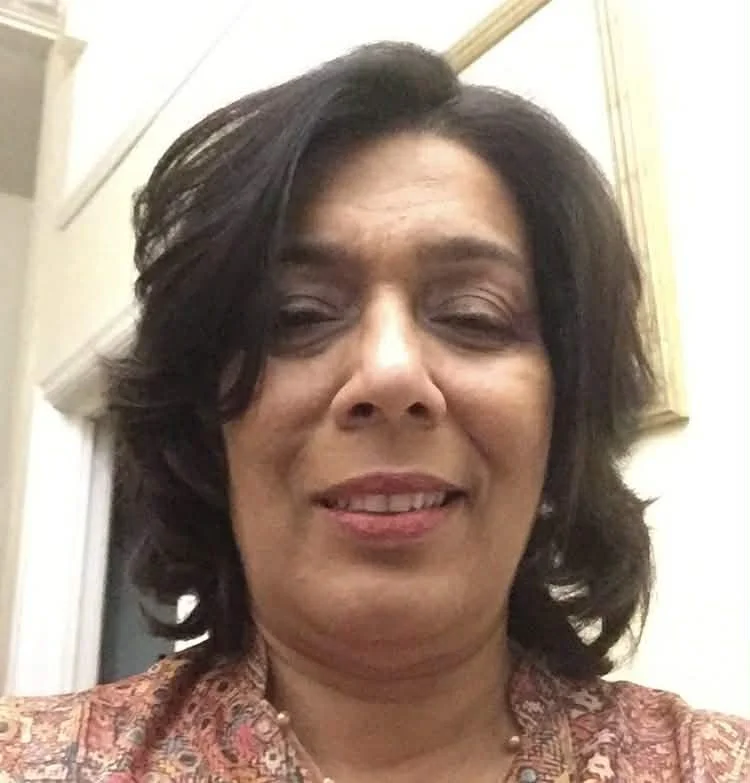
Dr Naeema Hann
Naeema is a language teacher, educator/ trainer for English and Right to Left scripted languages in migrant and higher education contexts. Naeema led the EAP modules on the International Foundation Year for over ten years and was Course Leader for the MA English Language Teaching at Leeds Beckett University. She also led modules on Course Design, Assessment and Materials Development, taught and developed materials for Urdu and Arabic. Naeema’s research and publications draw on these areas, focusing on learner insights into strategies, motivation and identity positions. Currently Naeema is Co-Chair for the National Association for Teaching English and other Community Languages to Adults (NATECLA).
-

Dr Marcin Lewandowski
Dr Marcin Lewandowski
Marcin Lewandowski is a manager, senior tutor, teacher trainer and researcher, and a Fellow of the Society for Education and Training, with over twenty years’ experience in the third-sector, Further Education, and Adult Community Learning sectors in London. As an ESOL teacher and project manager, he has extensive experience of issues affecting ESOL delivery in community settings. His doctoral research examined the Individual Learning Plan (ILP) and explored how goal-setting processes could be redesigned to foster learner autonomy, encourage learning beyond the classroom and support community cohesion. He has also published research on online course delivery and digital learning.
-
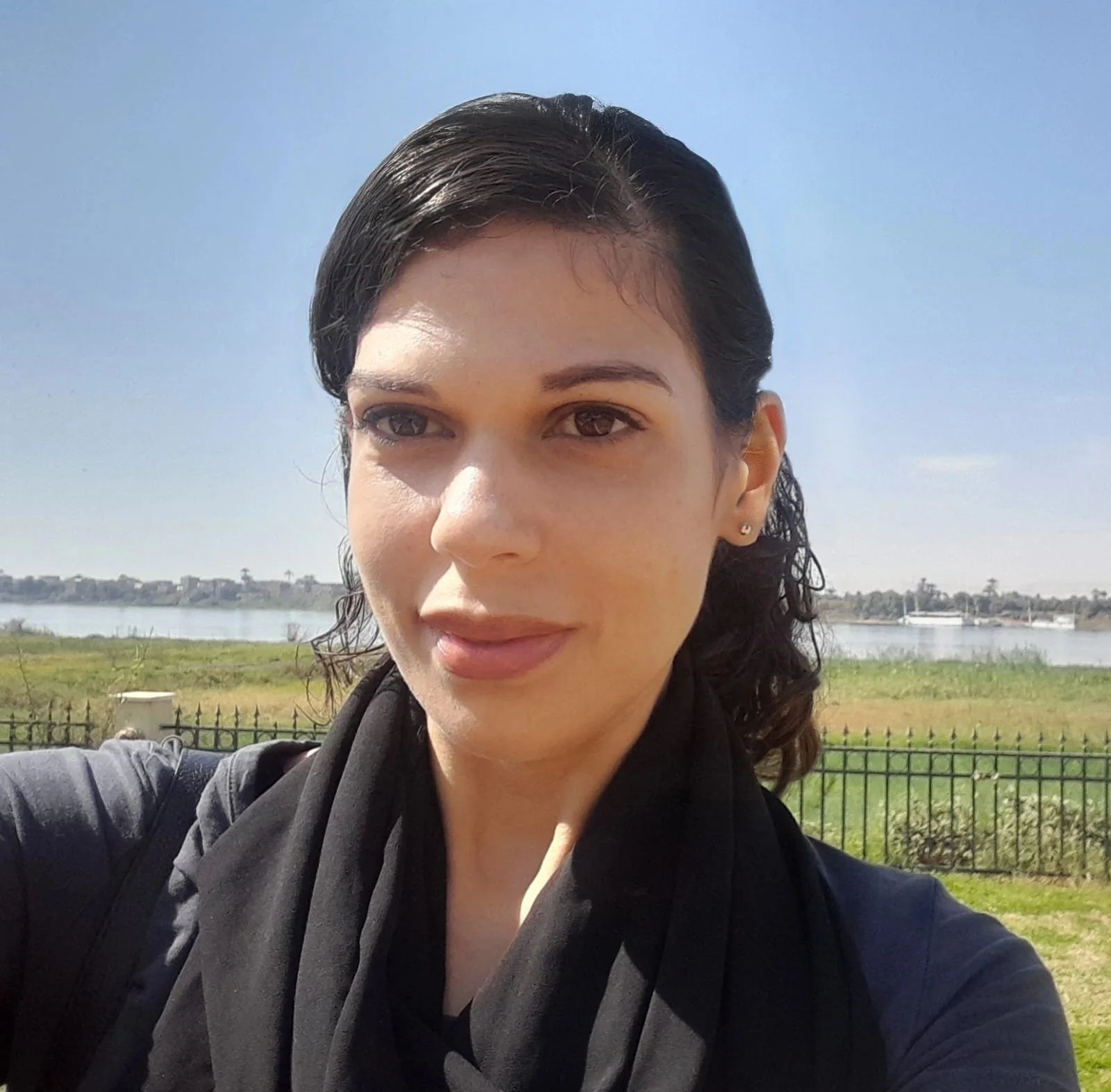
Charlotte Morriss
Charlotte is a doctoral candidate at the University of Leicester and a co-organiser of the Language Learning Psychology Community, with almost 10 years of language teaching experience. Charlotte is currently an editorial board member for the Language Issues journal and a research assistant at the University of Leicester. Her research is participatory and reflexive, using mainly qualitative and mixed-methods designs. Charlotte's research uses principles from organisational psychology and aims to improve job quality for educators.
-
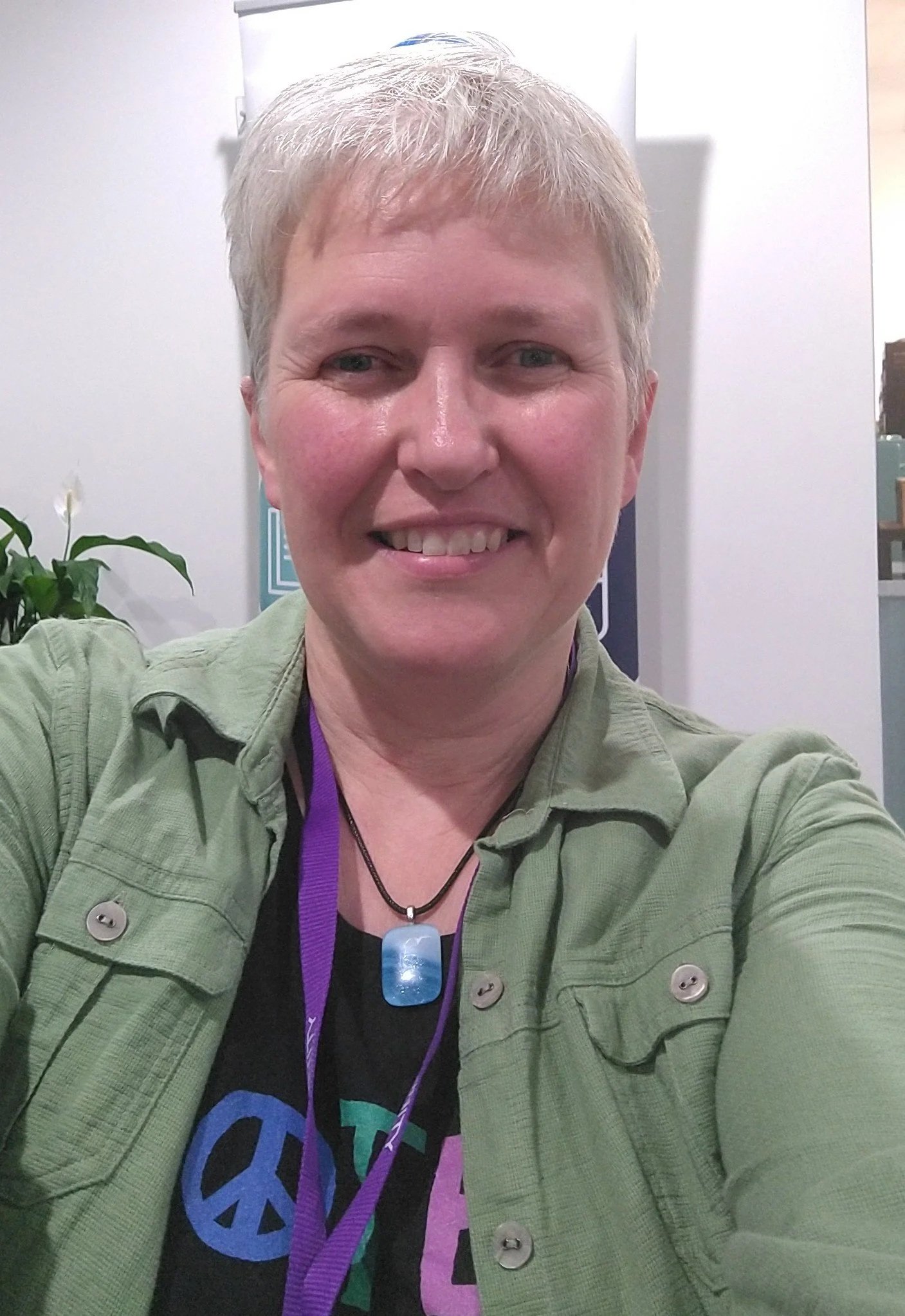
Dr Diana Tremayne
Diana Tremayne has been editing the Language Issues blog for the last few years. She previously worked as an ESOL Lecturer and Advanced Practitioner and was also co-chair of NATECLA between 2012 and 2015, as well as a trustee of the organisation. Her current role is at Leeds Beckett University, where she works in the School of Education. Her doctorate focused on informal online teacher professional learning, and she is particularly interested in how different spaces support learning and teacher agency. She is also interested in the use of technology in ESOL, as well as in grassroots community learning.
-
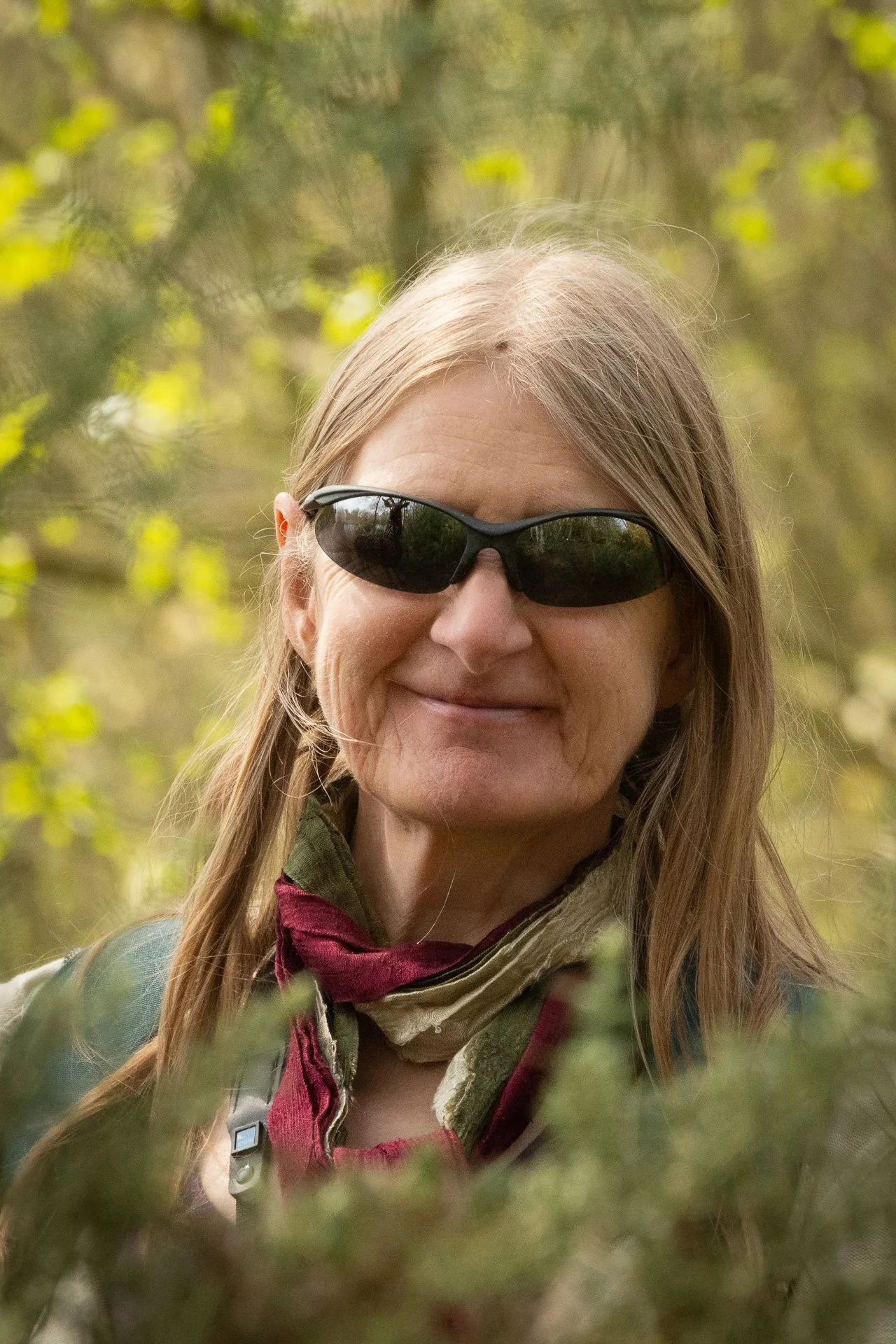
Julie Venner
Julie has a vast range of teaching experience, ranging from ESOL beginners in adult/community settings to EAP in higher education. Julie currently volunteers in an online conversation club, and for NATECLA/Language Issues since 2021.
-

Dr John Zavos
John is Director of MESH, the Migrant English Support Hub, a charity dedicated to supporting adult migrant language learners, primarily in the Yorkshire & Humber region. MESH works with colleagues and stakeholders to break barriers and improve access to learning for adult migrants, especially refugees and asylum seekers. John has worked in ESOL and refugee support since 2018, teaching English in a variety of contexts, including the third sector, adult education and prison. Prior to 2018, John worked for nearly 20 years as a lecturer at University of Manchester. His research focused on South Asian religions and cultures, both in South Asia and the diaspora.

The Language Issues blog
The Languages Issues blog complements our journal and can serve as a stepping stone before writers commit to something more formal in the Language Issues journal. The blog is a free resource for all ESOL practitioners.
While the journal is for members only the Language Issues blog is available to all ESOL practitioners and offers a range of posts which vary from reflections on the NATECLA conference, classroom practice, research and policy. The blog posts are generally shorter than articles for the journal and can be a great way to start off your writing journey as well as being easily accessible. They can be fairly informal in tone and if appropriate we can include photos and links. The frequency of posts varies a little but we are always keen to see more so do get in touch if you want to find out more.