
Our History
Did you know that NATECLA started more than four decades ago? Or that it wasn’t always known as NATECLA? Do you know who Ruth Hayman was and why her contribution was so impactful? Would you like to know about the controversial context of our origins?
Read on to find out more about our colourful history as we celebrate everything NATECLA has achieved from 1978 to date.
Context First
The Inner London Education Authority (ILEA) was established in 1964 and began operating in 1965. It was a special committee of the Greater London Council (GLC). The ILEA was:
created to take over the educational functions of the London County Council (LCC).
responsible for education in the 12 inner London boroughs.
focused on equality of achievement and innovation.
abolished in March 1990, and local councils took over responsibility for education.
responsible for producing a range of excellent ESOL resources, (mainly packs), teacher training materials eg Home Tutor Handbook, funding linked skills courses ESOL/subject specialist eg. for health visitors.
Section 11 funding, which originated from the Local Government Act 1966, primarily focused on supporting the needs of people of Commonwealth origin and began in 1966; It was not inclusive and was difficult to obtain. It may have been the only source of funding for ESOL when NATECLA was set up . It was effectively replaced by the Ethnic Minority Achievement Grant (EMAG) in 1999, marking the end of dedicated "Section 11 funding" as a distinct category.
In 1977 there were two BBC’ Parosi ‘national conferences, one in London, one at Burton Manor, near Manchester, for the organisers of language schemes. The agreement was made to form a national association of English language schemes.
Feb 1978 saw a conference in Birmingham to set up the National Association for the Teaching of English as a Second Language to Adults (NATESLA). A regional structure was chosen to prevent domination by the south of England.
1977-1979 Early days
The founding conference was held in Birmingham in Oct 1978 to adopt the new constitution. Ruth Hayman (NATESLA secretary) was largely responsible for this as she had trained as a lawyer in South Africa and had the skills to write the constitution. It was decided that annual conferences would be set in different venues in rotation, organised by branches.
Speakers were often controversial!
First chair: Marion Moselle
Speaker: Sandra Nicholls.
National events at the time: ILEA accepts the first Boat People and 10,000 Vietnamese dispersed across the UK.
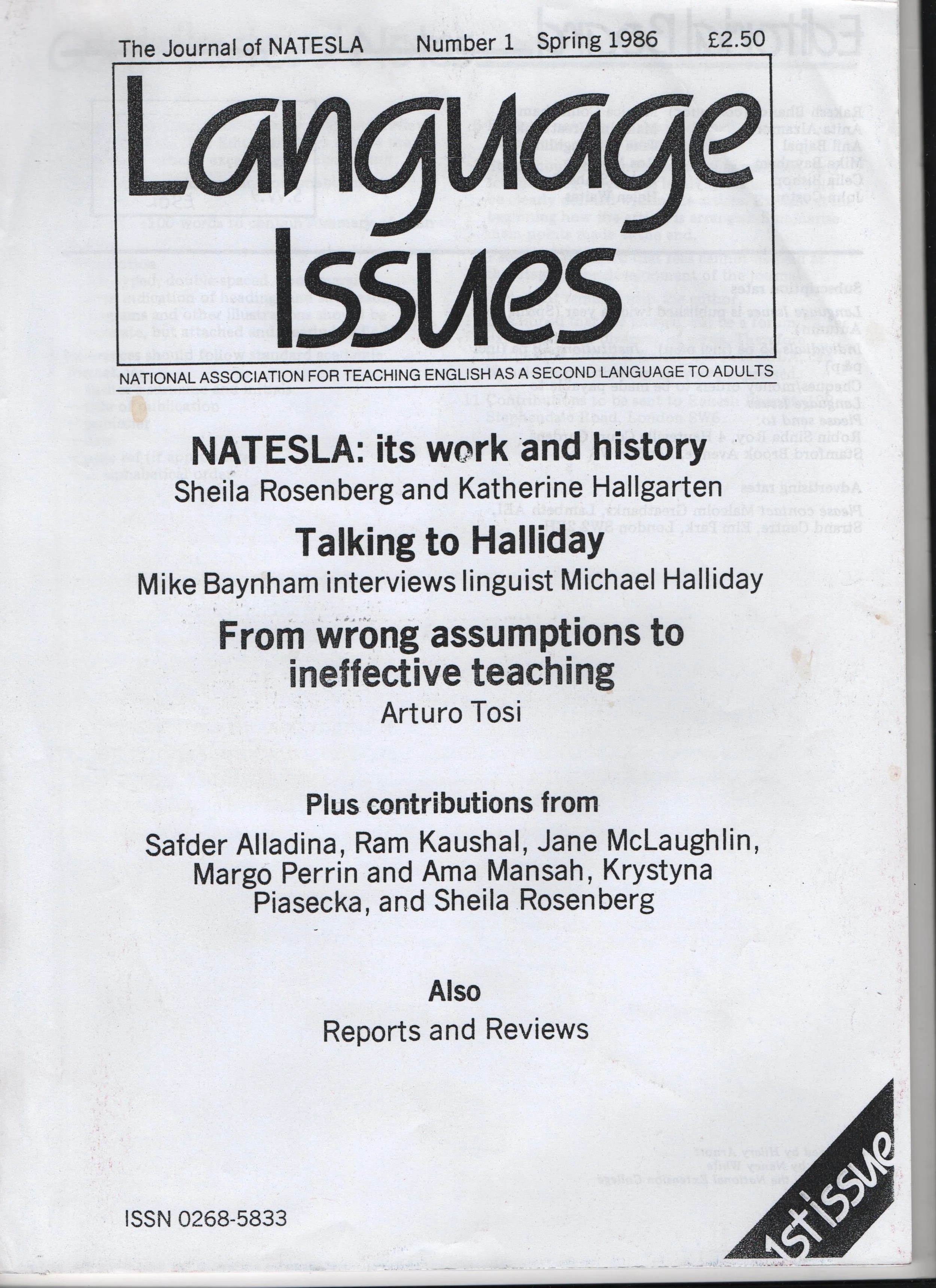
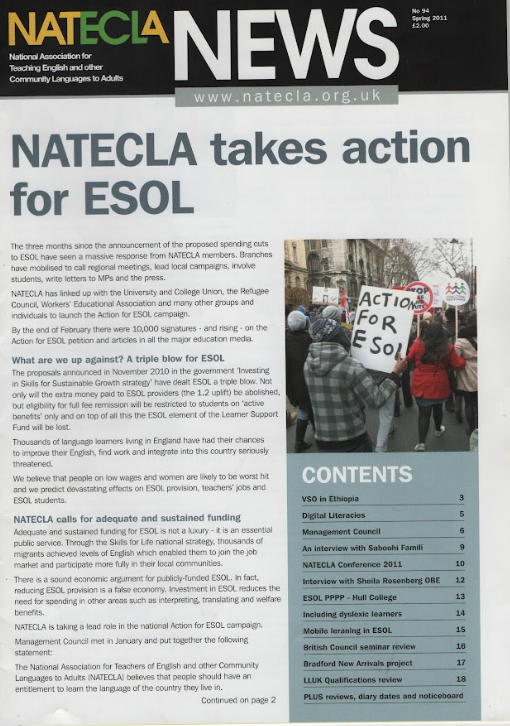
In Spring 1979, NATESLA released the first issue of NATESLA News which was a mainstay of our conferences until circa 2020.
That year also saw the first two catalogues of resources. These were published and updated until 1986. Catalogues were sold at conferences for £1 each. A travelling exhibition of resources was assembled as soon as NATECLA was set up but this disbanded in the 1990s.
In October 1979, there was a conference and AGM in Scarborough.
Chair: Sheila Rosenberg.

What is your recollection of those early days?
“We had regular meetings in Ruth Hayman’s house. We assembled NATECLA News on my kitchen table! At our second conference, held in Scarborough, we were invited to a civic reception. However, we turned down the invitation because they refused to endorse the campaign for sexual equality.”
- Sheila Rosenburg OBE, one of the first chairs of NATECLA and current President of the Ruth Hayman Trust.
1980’s Solidifying the association
XXXXXXX Brief intro about what happened in this decade inc some highlights / standout events and anything national. XXXXXXX
-
November
Event: Conference and AGM
Location: Brighton
Chair: Sheila Rosenberg
Sunday speaker: Tuku Mukherjee
Important events
In the 1980s NATECLA conducted a series of surveys in order to collect data for political lobbying.
NATESLA Survey Report: English as a Second Language Teaching for Adults from Ethnic Minorities: This was based on a survey carried out between January 1980 and January 1981. The survey showed wide variations across England and Wales. It made recommendations to LEAs to increase quality and quantity of ESOL teaching, provide more in-service training and recognise the disadvantage suffered by many second language in employment
-
October
3rd catalogue of resources
November
Event: Conference and AGM
Location: Bristol
Chair: Pam Frame
Theme: Student Autonomy
Important events
Decision to set up Ruth Hayman Trust after Ruth’s death shortly before the conference.
British Nationality Act
Publications
Nicholls, Sandra, and Julia Naish (1981) "Teaching English as a second language: A handbook for ESL tutors " BBC. The content was developed for a BBC Radio 4 Series in 1979.
-
November
Event: Conference and AGM
Location: Leicester
Chair: Doreen Joslin (Elcox)
Publications
NATESLA conducted a survey ESL provision for the 16-19(+) age group in Further Education and Adult/Community Education for submission to the Swann Committee of Enquiry into the Children from ethnic Minority Groups. The survey generated support from sympathic LEAs. The Language and Literacy Unit, established by the Inner London Education Authority (ILEA), helped to raise the profile of ESOL.
-
November
Event: Conference and AGM
Location: Manchester
Chair: Julia Nash
Theme: bilingualism.
Speaker: Prof Harold Rosen
Important events
Ruth Hayman Trust was set up as a registered charity.
-
Important events
Scottish branch was set up.
Elizabeth Evans Research Project into Training of teachers of English as a Second Language in the post-16 sector was carried out.
Sandra Nicholls took the initiative on teacher training on behalf of NATECLA.
-
January
Event: Conference and AGM
Location: Nottingham
Chairs: Celia Bishop and Katharine Hallgarten
Theme: Anti-racism.
Speaker: Peter -Newsam and the chair of the Commission for Racial Equality Farouk Dhondy
-
April
Event: Conference and AGM
Location: Sheffield
Chair: Anil Bajpai
Theme: New directions in ESL
Important events
Language Issues Journal was launched at the 1986 conference.
-
April
Event: Conference and AGM
Location: Birmingham
Chair: Zorina Ishmael- Bibby
Theme: Building bridges between ESOL and community language teaching
Important events
Opening of National Centre in Birmingham in Hall Green College, later South Birmingham College. And now South and City College Birmingham. The college has supported NATECLA for many years and currently provides office space for our staff.
-
April
Event: Conference and AGM
Location: Leicester
Chairs: Zorina Ishmael-Bibby and Ella Lutchmayer
Speaker: Buchi Emecheta
October
Regional conference: Revitalising the regions: NATECLA in the 1990’s. Is NATECLA still needed in the 1990’s?
Important events
Name change to National Association for the Teaching of English and Other Community Languages to Adults (NATECLA). This came about as a result of the work done by the Community Language Working Party, headed by Helen Casey.
-
April
Event: Conference and AGM
Location: York
Chairs: Anne Spiers and Abeda Laher
Theme: Watch your language
1990’s Supporting a resource poor sector
XXXXXXX Brief intro about what happened in this decade inc some highlights / standout events and anything national. XXXXXXX.
“It was a complete lottery if you got funding or not”
- Sheila Rosenberg (re. Section 11)
-
March
Event: Conference and AGM
Location: Glasgow
Chairs: Rakesh Bhanot and Francesca Target
Theme: language and identity
Publications
NATECLA Resources Exhibition Catalogue.
Important events
ILEA was abolished in 1990.
-
July
Event: Conference and AGM
Location: Swansea
Chairs: Rakesh Bhanot and Jane Taylor
Theme: 1992, language and communities
Important events
NATECLA National Centre moved to South Birmingham College where we have been supported since (office space etc).
-
July
Event: Conference and AGM
Location: Cambridge
Chair: Philida Schellekens
Theme: Education and training for multi-lingual adults. New challenges for NATECLA
Publications
NATECLA NEWS article: ‘Great Section 11 Lottery’.
“It was a complete lottery if you got funding or not” - Sheila Rosenberg.
-
July
Event: Conference and AGM
Location: Coventry
Chair: Philida Schellekens
Theme: NATECLA in the Nineties: language support, IT, open learning
Important events
Restrictions on categories of learners entitled to Section 11 provision finally lifted.
-
July
Event: Conference and AGM
Location: Brighton
Chair: Margaret Siudek
Theme: Quality
Important NATECLA events
The concept of ‘dormant’ branches was established as it was challenging for some volunteers to keep branches running.
Kathleen Jenkins retires.
Dilys Garrod becomes national administrator
-
June
Event: Conference and AGM
Location: London
Chair: Margaret Suidek
Theme: Surviving and managing change
Important events
Bradford riots
-
June
Event: Conference and AGM
Location: Brighton
Chair: Sheila Rosenberg
Sunday speaker: Tuku Mukherjee
Important events
Publications
-
June
Event: Conference and AGM
Location: Birmingham
Chair: Raksha Solanki
Theme: teaching strategies: matching student needs to accreditation
-
June
Event: Conference and AGM
Location: Salford
Chairs: Ann Watts, Raksha Solanki
Theme: Promoting and encouraging wider participation
Speaker: Judith Summers of Kennedy Committee.
Important events
Section 11 abolished.
NATECLA Twentieth anniversary.
Dilys Garrod leaves.
-
November
Event: Conference and AGM
Location: Winchester
Chairs: June Challis, Jill Stevens
Theme: Inclusive learning
Speaker: Dr Haroon Saad NIACE and HMG adviser on social inclusion
Important events
Publication of the Moser Report ‘Improving Literacy and Numeracy’
2000’s Skills for Life era
XXXXXXX Brief intro about what happened in this decade inc some highlights / standout events and anything national. XXXXXXX
“We had enough credibility to help write it and we were paid to run training sessions.”
- Sheila Rosenburg remembers the work NATECLA did on the Adult ESOL Core Curriculum.
-
July
Event: Conference and AGM
Location: Pontypridd
Chairs: June Challis, Jill Stevens
Theme: Moser: the way forward
Keynote speaker: Tim Downing DfE
-
July
Event: Conference and AGM
Location: QMC Chairs June Challis, Jill Stevens “
Theme: Breaking the barriers Adult Literacy and Basic Skills Unit
Keynote speaker: Liz Lawson (ALBSU)
Important events
Skills for life Strategy: Adult ESOL Core Curriculum
Cantle Report National activity on ESOL
9/11
“We had enough credibility to help write it and we were paid to run training sessions.”
- Sheila Rosenburg remembers the work NATECLA did on the Adult ESOL Core Curriculum.
-
July
Event: Conference and AGM
Location: Glasgow
Chairs: June Challis, Jill Stevens
Theme: national perspectives on ESOL
Keynote speaker: Bill Miller MEP for Glasgow
Important events
David Blunkett Home Secretary: ‘Reclaiming Borders after September 11’ leading to ‘Secure Borders, Safe Havens. Integration with diversity in modern Britain’.
Nationality, Immigration and Asylum Act.
-
July
Event: Conference and AGM
Location: Leeds
Chair: June Challis
Theme: Inspiration and Innovation
Keynote speaker: Ron Carter
Important events
Crick Report on citizenship ‘The new and the old. The report of the United Kingdom Advisory Group’
-
July
Event: Conference and AGM
Location: Royal Holloway London
Chairs: Irene Austin and Isobel Arnold
Theme: Language and identity
Speaker: Annette Zera
Important events
Development of citizenship materials for ESOL learners.

-
July
Event: Conference and AGM
Location: Wolverhampton
Theme: Challenge and Change
Chairs: Irene Austin & Isobel Arnold
Speakers: Prof Mike Baynham University of Leeds, Sue Henderson SfLStrategy Unit Chairs Irene Austin & Jean Wilson
-
July
Event: Conference and AGM
Location: Chester
Theme: Language for Life
Chairs: Irene Austin & Anne McKeown
Speaker: Prof David Crystal
Important events
Racial and Religious hatred Act
NIACE ESOL report: ‘More than a Language’
Proposal to end automatic fee remission for ESOL in England
Proposal the applicants for settlement should fulfil the same language requirements as those for citizenship
Proposal for a revised ESOL strategy for Scotland
-
July
Event: Conference and AGM
Location: City University London
Theme: Politics , Principle and Practice
Chairs: Irene Austin & Anne McKeown
Speaker: Yasmn Alibai Brown
Publications
Sheila Rosenberg writes a seminal book on the history of ESOL:
Rosenberg, S.K., 2007. A critical history of ESOL in the UK, 1870-2006. Published by NIACE.
What was your experience of writing it? What has been its impact?
“It took 4 years. Single theme is ‘people took initiative’ and I did have good editors to help. They were Tom Jupp and Sandra Nicholls from the Industrial Language Training Unit.”
- Sheila Rosenberg.
-
July
Event: Conference and AGM
Location: Warwick University
Chairs: Irene Austin & Anne McKeown
Theme: Values and Vision
Speaker: Prof Ron Carter
-
November
Event: Conference and AGM
Location: Leeds University
Chairs: Irene Austin & Anne McKeown
Theme: Facing the future, responding to change
Speaker: Prof Clive Upton, Anne Cryer
Important events
Government initiative: ‘A New Approach to ESOL’
Sheila Rosenberg receives the MBE for her services to ESOL
“I was amazed. I was going to refuse but I knew that NATECLA members had put me forward, so I accepted. My son and grandson came. We waited in the Long Gallery until an official came to get me. I had to curtsey! I saw Annie Lennox there, she was receiving an honour too! The only refreshment was a glass of orange squash!”
- Sheila’s recollections about receiving the MBE.
2010’s A time for action
XXXXXXX Brief intro about what happened in this decade inc some highlights / standout events and anything national. XXXXXXX
-
July
Event: Conference and AGM
Location: Surrey University
Chairs: Pat Sullivan & Balvinder Basra
Theme: Language, migration and identity
Speaker: Dr Celia Roberts.
-
July
Event: Conference and AGM
Location: University of Warwick
Chair: Balvinder Basra
Them: Language and Learning
Speaker: Prof Adrian Blackledge
Important events
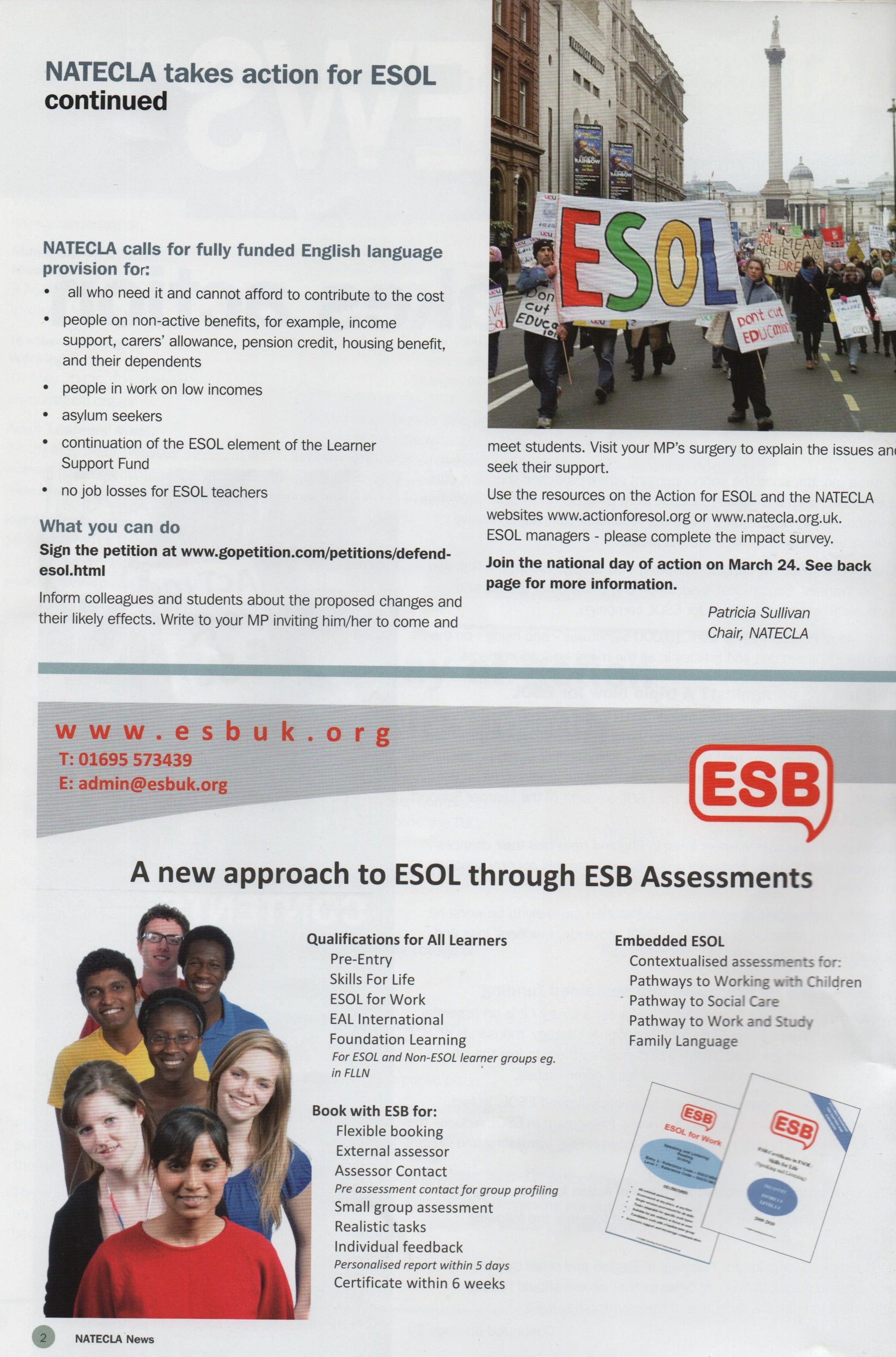
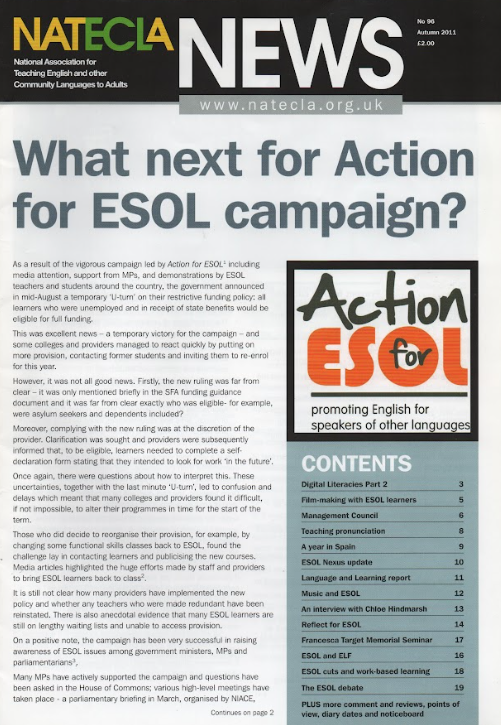
Current issue funding ESOL leading to ‘Action for ESOL’ campaign.
-
July
Event: Conference and AGM
Location: Liverpool Hope University
Chairs: Judith Kirsh & Diana Tremayne
Theme: The Mystery and Magic of Language
Speaker: Marina Lewycka
Important events
Current issues include funding of ESOL and professional qualifications of teachers (IfL).
Publication of the ESOL Manifesto Action for ESOL.
-
July
Event: Conference and AGM
Location: Sheffield University
Chairs: Judith Kirsh and Diana Tremayne
Theme: E is for Englishes .
This was the last conference with a theme. However, this was the first conference with a teach meet (hosted by Diana Tremayne).
Important events
Issues ESL quals not included for funding.
Action for ESOL involved in representations.
October 2013 NATECLA gained charitable status.
Publications
NATECLA involved in consultation on quals. Opposed to removal of ‘ESOL with citizenship’ materials for new language qualifications for settlement. Consulted by government on Integration of migrants in the UK.
-
July
Event: Conference and AGM
Location: Sheffield
Chairs: Judy Kirsh and Diana Tremayne
Important events
Wide consultations: Jenny Roden and Mary Osmaston represent NATECLA on British Council Nexus Advisory group.
BIS/JCP consultation on ESOL screening
COMPASS Report
DEMOS research on ESOL policy (read more about the ESOL strategy for England)
Students Lobby Parliament

-
July
Event: Conference and AGM
Location: Queen Mary University
Chairs: Diana Tremayne and James Cupper
Speaker: Russell Mayne
Important events
Issues EOL meets EAL
Funding cuts could mean the end of adult education
-
November
Event: Conference and AGM
Location: Nottingham
Chairs: James Cupper and Jenny Roden
Important events
NATECLA heads up a campaign for a national strategy with a launch at Westminster: launch of ‘Towards a Strategy for ESOL in England’.
December 2016 Casey review on Integration and Opportunity
All Party Parliamentary Group (APPG) on Opportunity and Integration - Chair Chukka Umuna . For ESOL, the Casey report and later the APPG both ‘confirmed’ that knowledge of English was key to integration
Brexit referendum
-
July
Event: Conference and AGM
Location: Nottingham
Chairs: James Cupper and Jenny Roden
Speaker: Rachel Roberts
Last NATECLA News published, to be replaced by electronic updates. Format retained for an extended conference programme in 2018 . Farewell to Newsletter article by Jenny Roden (Language Issues)
Important events
APPG Review June 2017 to report March 2018.
Oct 2016 ‘Towards an ESOL Strategy for England- How far have we got?’
Interim meeting held at Westminster.NATECLA invited to advised Home Office on ESOL learning hours for the Syrian Refugees Resettlement Programme.
James Cupper, co-chair, makes a presentation to the APPG.
November 2017 – First conference of NATECLA Scotland (branch set up by Pauline Blake Johnson), which has been held annually ever since. Speaker: Rachel Roberts
-
July
Event: Conference and AGM
Location: University of Aston
Chairs: Jenny Roden and Mary Osmaston.
Speakers: Philida Schelleken and Silvana Richardson, Bell Education
Important events
March 2018 APPG Review published. Promised a stand-alone ESOL strategy. Consultation on the strategy started.
-
July
Event: Conference and AGM
Location: University of Aston
Chairs: Mary Osmaston and Nafisah Graham-Brown.
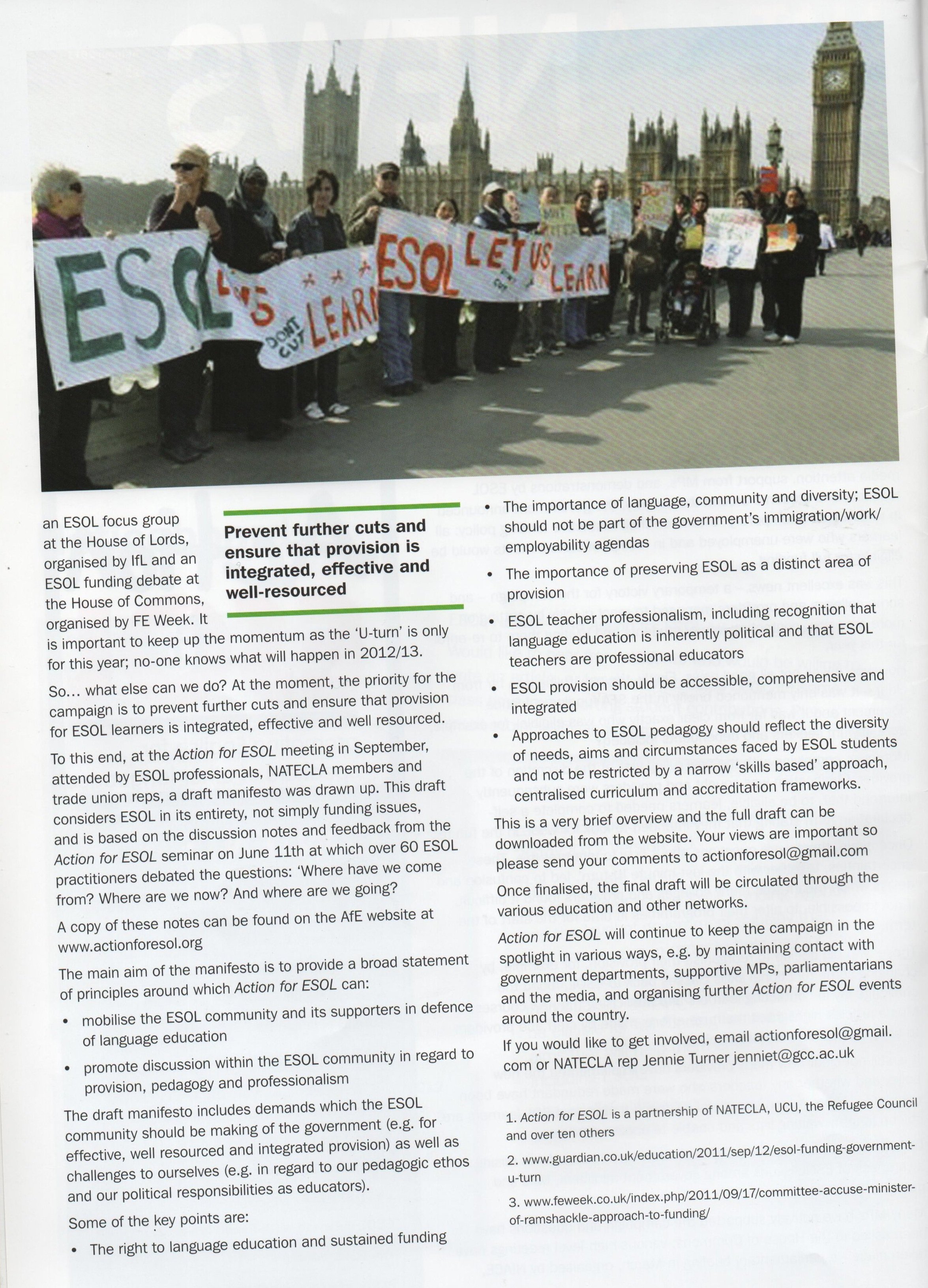
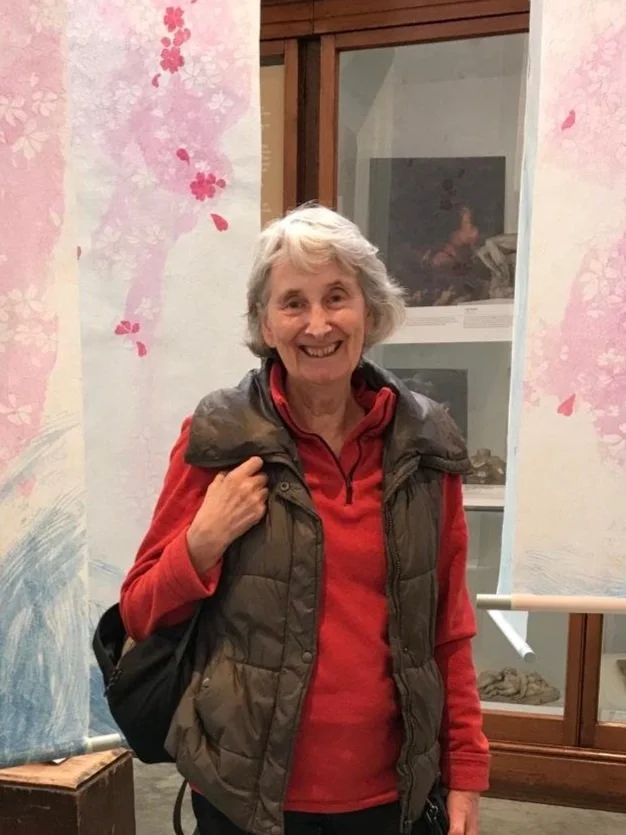
“I have no doubt that NATECLA’s independent charitable status, together with the commitment and energy of its members, place it in a unique position to make an impact on the ESOL landscape in the future.”
- Jenny Roden National Co-Chair 2015-18
2020’s Pivoting the Pandemic
XXXXXXX Brief intro about what happened in this decade inc some highlights / standout events and anything national. XXXXXXX
-
July
Event: Conference
Location: Online
Theme: ESOL in Lockdown in July 2020.
Speaker: Russell Stannard
November
Event: BIG ESOL Conversation and AGM
Location: Online
Chair: Chairs Rachel Oner, Mary Osmaston and Nafisah Graham-Brown.
Speakers: Nicky Hockly and James Simpson
Important national events
COVID pandemic and ensuing lockdowns.
Important NATECLA events
Began NATECLA webinar timetable, forums and regular #ESOLchat Twitter chats. Online Offer Working Group was set up with members of management council to help organise online events going forward. Post lockdowns, the group was renamed the Events Working Group.
NATECLA convened a Diversity and Membership working group to explore how representative NATECLA is of our membership and of the wider ESOL community.
Launch of the Island of Ireland branch.
-
June
Event: Conference and AGM
Location: Online
Chairs: Rachel Oner and Nafisah Graham-Brown.
Speakers: Gulwali Passarlay and Nik Peachey
-
June
Event: Conference and AGM
Location: University of Aston
Chairs: Rachel Oner and Nafisah Graham-Brown.
Speakers: Zaina Aljumma and Ofsted panel (Mary Osmaston, Jennie Turner and Keeley Donati)
Important NATECLA events
First research poster exhibition held at conference. All posters uploaded to members area.
First use of the NATECLA conference app.
Due to the increased size of our conferences now, we made the decision to remain in one city ie Birmingham which is most accessible to people and located near head office.
-
June
Event: Conference and AGM
Location: University of Aston
Chairs: Rachel Oner and Greg Dugdale.
Speakers: Andy Forbes and Dr. Kate Brierton.
Important NATECLA events
Launch of the Cymru branch (as such, NATECLA branches now represent all of the 4 nations).
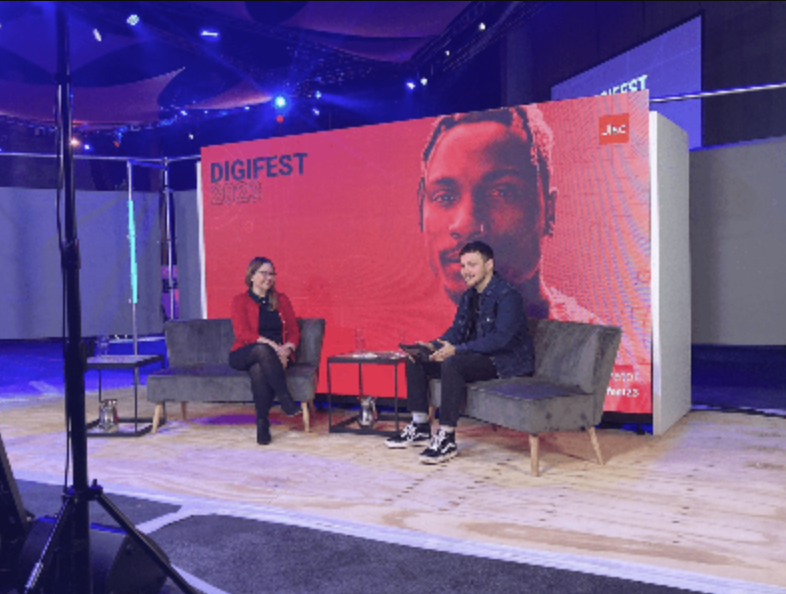
Rachel Oner was awarded a JISC Community Champion award this year for her work on NATECLA communities since lockdowns.
“Being nominated means so much. NATECLA is a unique organisation run by volunteers and supported by its members. Without this community, the organisation would simply not exist.”
- Rachel Oner.
-
June
Event: Conference and AGM
Location: University of Aston
Chairs: Paul Sceeny and Naeema Hann
Speakers: Stephen Evans and Richard Chinn
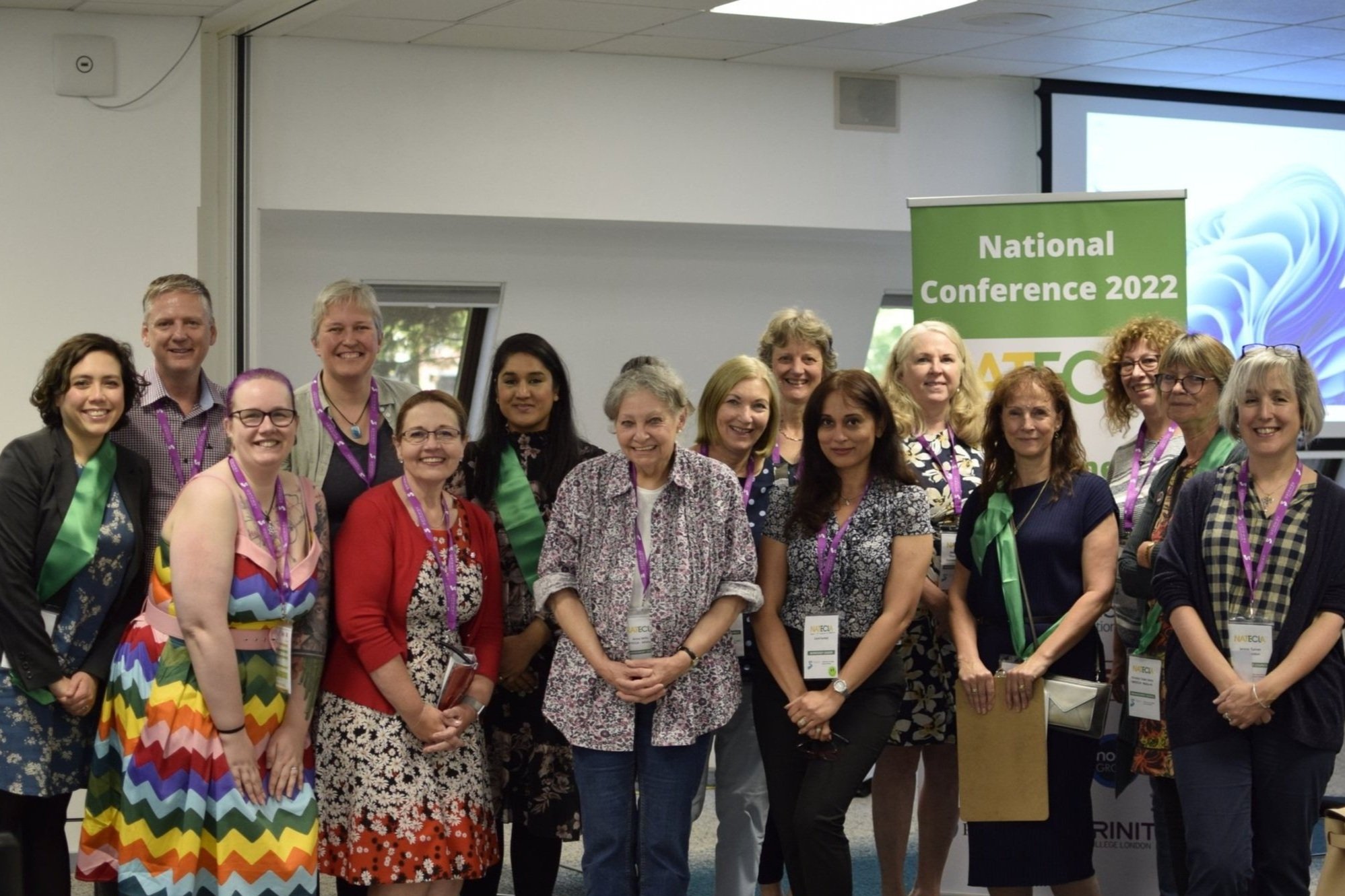
Important NATECLA events
First use of the online conference.
NATECLA merchandise launched: pens, trainer lanyards and badges.
Launch of new NATECLA website and members area.
-
June
Event: Conference and AGM
Location: University of Aston
Chairs: Paul Sceeny and Naeema Hann
Speakers: Emily Bryson and Q&A on ESOL in devolved areas (Alex Stevenson, Miguel Silva, Philida Schellekens and Mary Osmaston)
National Association for Teaching English and Community Languages to Adults.
NATECLA

